
 Adult Medicine
 Behavioral Health
 Dental
 Endocrinology
 HIV/STD Screening & Treatment
 LGBTQ Services
 OB/GYN
 Pediatrics
 Pharmacy
 Senior Care
 Vaccinations & Immunizations
 Vision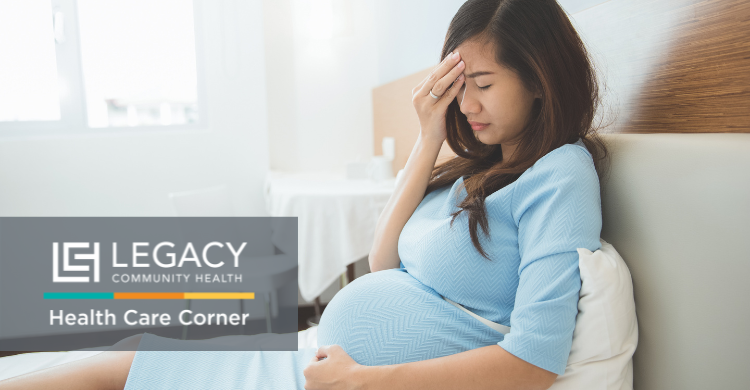
For many women in their 40s, pregnancy and perimenopause do not arrive one after the other. They come at the same time. Understanding how these two transitions interact matters whether you are planning a pregnancy or trying to prevent one.
So how did we get here, and what does it mean for your care?
More Women Are Having Children Later
Later-in-life parenthood is no longer uncommon. The CDC reports that more than 147,000 women aged 40 and older gave birth in 2023, a new record, and births in this age group have increased by 193% since 1990.
The reasons vary. Some women put off parenthood for careers or education. Others find the right partner later or turn to assisted reproductive technology. Whatever the path, the result is the same. More women are navigating pregnancy while their bodies are simultaneously entering perimenopause.
What Perimenopause Actually Is
Perimenopause is the gradual transition that leads up to menopause, and it looks different for everyone. For some women, it lasts less than a year. For others, it stretches close to a decade, though three to four years is most typical. UCLA Health notes that it most often begins in the mid-to-late 40s, though genetics can push that window earlier or later.
Behind the scenes, your body is producing less estrogen and progesterone, the two hormones that keep your menstrual cycle running on schedule. As those levels shift, you might notice irregular periods, hot flashes, night sweats, mood changes, or trouble sleeping. Every woman’s experience is different, and you may not deal with all of these. But they all trace back to the same thing, changing hormones. And changing hormones do not mean your fertility is gone.
That distinction matters. Menopause is only confirmed after 12 full consecutive months without a period. Until that point, a woman is still in perimenopause, and pregnancy is still possible.
Yes, You Can Still Get Pregnant
A lot of women assume that irregular or missing periods mean they can no longer get pregnant. That is not the case. University Hospitals explains that ovulation does not stop during perimenopause — it just becomes harder to predict. Hormonal shifts can even cause you to release more than one egg in a short window, which is one reason why the chance of twins actually goes up with age.
The odds of conceiving do decline significantly. By the early 40s, the chance of getting pregnant in any given month is around 10%. By the late 40s, it drops to 2 or 3%, and below 1% after age 50. But none of those numbers are zero. And there is currently no hormone test that can reliably predict when menopause will arrive or when ovulation will stop for good.
That means if pregnancy is not part of your plan, contraception still matters. Most providers recommend continuing birth control until a full 12 consecutive months without a period have passed.
Erica Giwa, MD, an OB-GYN at Legacy Community Health, continues to discuss contraception with her patients as long as they are still having a cycle. “They absolutely need birth control until they are fully menopausal,” Dr. Giwa says. “Until this time, pregnancy is possible.”
When Pregnancy and Perimenopause Overlap
One challenge that comes with pregnancy during perimenopause is that the two conditions share many of the same symptoms. Fatigue, missed periods, mood changes, nausea, and breast tenderness can all point in either direction. That overlap can make it easy to miss a pregnancy, which means prenatal care may start later than it should.
Dr. Giwa sees this firsthand. When a patient in her 40s comes in with the symptoms described above, her approach is straightforward. When in doubt, do a pregnancy test. If the result is negative, she and her team can then help the patient navigate her symptoms with perimenopause in mind.
If you are 35 or older, your pregnancy is medically classified as advanced maternal age. That comes with real risks worth understanding. UPMC notes that women in this group are more likely to develop gestational diabetes or preeclampsia and have a higher chance of needing a cesarean delivery or experiencing heavy bleeding after birth.
There is also an increased chance of chromosomal conditions, including Down syndrome, which the American College of Obstetricians and Gynecologists estimates affects approximately 1 in 86 births after age 40. Rates of miscarriage, stillbirth, and preterm birth also rise with age.
Beyond the clinical risks, there is an emotional side that often catches women off guard. Dr. Giwa notes that many of her patients simply do not believe pregnancy is possible at this stage of life. “The initial shock is really hard to overcome,” she says. She finds that in time, most women are able to process the news, especially with family support.
None of this means a healthy pregnancy is out of reach. You need preparation, close monitoring, and care from a provider who understands what this stage of life involves.
What Preparation Looks Like
If you are over 35 and thinking about getting pregnant, the American College of Obstetricians and Gynecologists recommends starting with a preconception visit with your OB-GYN to talk through your health history, prenatal vitamins, and whether genetic screening makes sense for you. Women over 40 may also be referred to a maternal-fetal medicine specialist who focuses on higher-risk pregnancies.
Once pregnant, you may have more frequent visits, and your provider may recommend genetic testing or a different delivery plan. That is not a reason to worry — it is just care shaped around where you are in life.
If you are not trying to conceive, the conversation with a provider still matters. Contraception is necessary until you are fully through menopause, and there are good options like progestin-releasing IUDs and progestin-only pills. The right choice depends on your health history, which is why talking it through with your provider is so important.
You Are Not Alone in This
If you’re navigating pregnancy and perimenopause at the same time, you are far from alone. And you deserve care and information that reflects your reality, not outdated assumptions.
At Legacy Community Health, our OB-GYN and women’s health teams are here to meet you wherever you are in your reproductive journey, whether you are planning a pregnancy, navigating an unexpected one, or managing the changes perimenopause brings.
Sources: UCLA Health | University Hospitals | UPMC HealthBeat

 HIV/STD Screening & Treatment
 OB/GYN