
 Adult Medicine
 Behavioral Health
 Dental
 Endocrinology
 HIV/STD Screening & Treatment
 LGBTQ Services
 OB/GYN
 Pediatrics
 Pharmacy
 Senior Care
 Vaccinations & Immunizations
 Vision
Hundreds of food recalls happen each year in the U.S., which explains why we see so many stories about them. But not all of these recalls happen because the food would make us sick. Some are about a missing allergen on a label or a manufacturing mistake.
The more important food safety stat is this: about 1 out of 6 people become ill every year from contaminated food, according to the CDC. Would it surprise you to know that many of those illnesses happen because of the way food is washed, stored, cooled, and cooked at home?
That’s why some simple habits at home can keep your family safer.
What Happens When Food Gets Recalled
Food recalls happen for one of three reasons.
- Contamination – This is the foodborne illness category.
- Undeclared allergens – One of the most common reasons for recalls, with milk the most frequent culprit.
- Manufacturing defects – These recalls mainly happen due to foreign material contamination.
A recall also doesn’t mean every similar product is unsafe. “Most people think all similar products are recalled,” said Sean Barrett, Nutrition and Fitness Director at Legacy. “But a recall applies to specific lot numbers, batches, or distributors.” Check the recall notice against the package in your kitchen. If it matches, don’t eat it. “You can return the food or exchange it,” he said. “You will not lose money.”
While the headlines can make it feel like you have no control, you actually have more than you think. You can check recalls yourself and get email updates.
The simplest place to start is FoodSafety.gov, which pulls recall notices from both the FDA and the USDA into one list. If you want alerts by email, the FDA offers a signup on its recalls page for most grocery items, and the USDA has its own subscription service for meat, poultry, and egg products.
How Do You Shop and Store Food Safely?
This is where small habits make a big difference. Think about CART since you’re already at the store.
- C – Check dates the right way. Most ‘best by’ dates are about quality, not safety. That being said, you don’t want to get too far from the best-by date. Infant formula is one example where the date is a hard and fast rule.
- A – Apart is what you want raw meat to be from everything else in the cart and in the bag.
- R – Refrigerate your groceries within two hours, or one hour if it’s over ninety degrees outside. Pro tip: if grocery shopping is on your list of errands, do it last.
- T – Temperature of the fridge should be 40 degrees, and the freezer at zero. Most people assume the dial inside the fridge tells them the temperature, but it doesn’t. The FDA and USDA both recommend keeping an appliance thermometer in the refrigerator and one in the freezer.
Once food is home, leftovers are on a clock too. Barrett says keeping them too long is one of the most common mistakes he sees, especially when families are stretched thin. “If it’s been in the fridge more than three or four days, don’t reheat it and eat it,” he said. “If you need to keep it longer than three days, freeze it.” And when it’s time to thaw, skip the warm water in the sink. Use cold running water or thaw it in the refrigerator instead.
How Do You Keep Germs From Spreading in Your Kitchen?
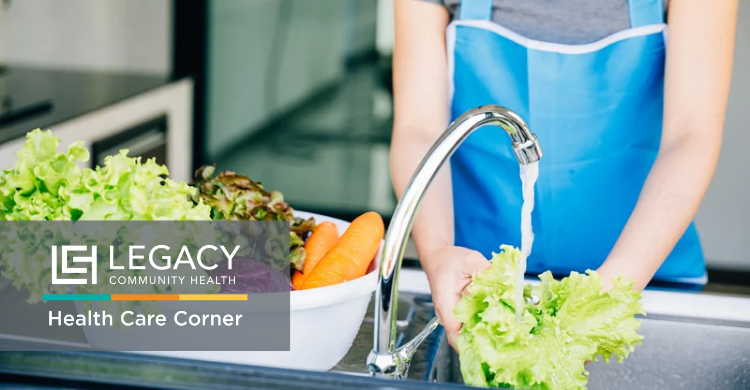
Start with how you wash produce. Wash your vegetables before eating (rather than before storing) under plain running water. For firm produce, like cucumbers and potatoes, use a clean vegetable brush. Berries, grapes, and leafy greens just get a gentle rinse. Don’t use soap, bleach, or produce wash on anything, and use a clean towel to dry, if needed.
Then watch what touches what. Most kitchen germs don’t come from food itself. They come from cross-contamination, food touching something that touched something else. Use one cutting board for raw meat and a different one for produce. “One mistake I see most often is using the same cutting board and knife to chop vegetables and cut meat,” Barrett said. The knife needs to be swapped or washed too, not just the board. Wash your hands for a full twenty seconds before, during, and after cooking. Also, after you handle raw meat, clean the counter with FDA’s suggested solution, which is one tablespoon of bleach per gallon of hot water.
Fact vs Fiction in Food Safety
- Washing raw chicken makes it safer. The CDC gets the most pushback for this one because we’ve all been trained to do this. The problem is that washing it gets the bacteria on your sink and counters.
- If it looks and smells fine, it is fine. Bad smells come from germs that ruin food, not the ones that make you sick. Those have no smell at all.
- The fridge will stop bacteria from growing. Listeria, for example, grows at refrigerator temperatures and survives freezing. It caused 21 of the 22 outbreak-related deaths in 2025.
- Let hot food cool on the counter first. Refrigerate within two hours, and in Houston heat, above 90 degrees, you only have one hour. Bacteria multiply fastest between 40 and 140 degrees, so a dish on the counter is in the danger zone. And reheating does not undo it, since some bacteria leave behind toxins that survive cooking.
- Raw cookie dough is only risky because of the eggs. The bigger danger is the flour. Flour is a raw ingredient that comes straight from the field, and it is not treated to kill germs before it is bagged. E. coli outbreaks have been traced to it more than once. So the spoon, the beaters, and the bowl are all off limits. So is raw dough as a craft activity. If you want the taste, buy edible cookie dough from the store, made with heat-treated flour.
- You can tell meat is done by looking at it. Ground beef can turn brown before it is safe, and it can stay pink after it is. The same goes for juices running clear. The only way to know for sure is a food thermometer. Ground meat needs 160 degrees, chicken needs 165, and whole cuts of beef or pork need 145 with a three-minute rest.
When Should You Call a Doctor?
Some symptoms mean that it’s time to get checked out. These include:
- Bloody diarrhea
- Diarrhea that lasts for more than three days
- A fever of over 102 degrees
- Vomiting so much that you can’t keep liquids down
- Other signs of dehydration like barely urinating, a dry mouth, or dizziness when you stand up.
If you’re pregnant and you have a fever or body aches, contact your doctor sooner because some foodborne illnesses can affect the fetus. Children under 5, adults over 65, and anyone with a weakened immune system also may be at increased risk.
Still Not Sure? We Can Help.
Don’t assume the last thing you ate is what made you sick. Most foodborne illnesses show up about 24 to 72 hours after eating contaminated food, but some, like Listeria, can take up to one to four weeks. Most foodborne illnesses do clear up on their own in a day or two, thankfully, so rest and fluids are usually enough.
But when they’re not, don’t wait it out. If you have any of the serious symptoms listed above, seek immediate treatment. For questions about symptoms that aren’t urgent, or for follow-up once you’re feeling better, Legacy is here for you. Health Beyond Care means we want to support you in and out of the exam room. Call our nurse line or schedule an appointment with your provider.
Sources: CDC | FDA | USDA Food Safety and Inspection Service | USDA Food and Nutrition Service | FoodSafety.gov | U.S. PIRG Education Fund, Food for Thought 2026

 HIV/STD Screening & Treatment
 OB/GYN