
 Adult Medicine
 Behavioral Health
 Dental
 Endocrinology
 HIV/STD Screening & Treatment
 LGBTQ Services
 OB/GYN
 Pediatrics
 Pharmacy
 Senior Care
 Vaccinations & Immunizations
 Vision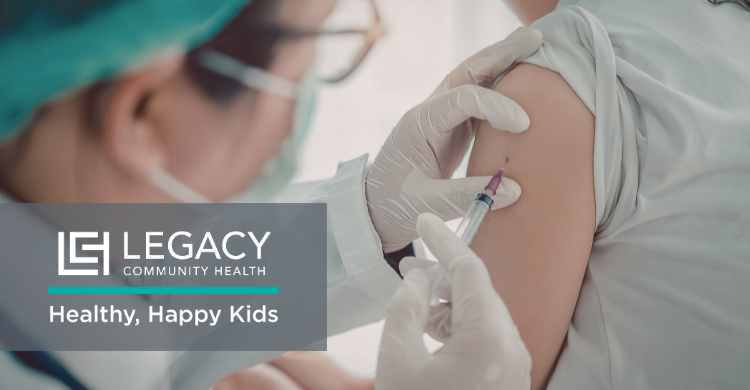
Preparing for college involves more than choosing classes and packing for move-in day – it also means making sure your health is protected before campus life begins.
With April marking World Immunization Week, it’s a great time for college‑bound juniors and seniors, along with their parents, to check that recommended vaccinations are up to date.
With everything else on your plate, a doctor’s visit probably isn’t top of mind, but it’s one of the most practical things you can do before move-in day. Many schools have vaccination requirements that may take more than one visit to fulfill, so the earlier you start, the better.
Why College Is a Different Kind of Environment
Living in a dorm means sharing bathrooms, hallways, study spaces, and dining halls with hundreds of other people from all over the country and the world.
That kind of close contact can allow infections to spread more easily. Making sure your immune system is prepared before you arrive is an important part of staying healthy.
The Danger of Meningococcal Disease to College Students
If there is one vaccine conversation every college-bound student needs to have with their doctor before school starts, it is about meningococcal disease.
This is a serious bacterial illness that can cause meningitis, which is an infection of the brain and spinal cord. Between 200 and 400 people in the United States contract meningococcal disease each year, and about 10 to 15 out of every 100 people who get it do not survive. Among those who recover, up to one in five are left with permanent disabilities, including deafness, brain damage, or loss of limbs.
The disease spreads through respiratory and throat secretions, meaning kissing, sharing drinks, and close contact in dorms and Greek housing all increase your risk, making first-year students living on campus a higher-risk group.
The CDC recommends all preteens get the MenACWY vaccine at age 11 or 12, which covers four strains of the bacteria. A booster is recommended at 16 because protection decreases over time, so if you haven’t had one yet, you need it before college.
There is also the MenB vaccine, which covers a fifth strain and requires two doses six months apart.
“If you will be living in close quarters with other college students, MenB may be a good idea – but plan ahead,” said Katherine Wang, Clinical Pharmacy Specialist at Legacy Community Health. “The two available brands, Trumenba® and Bexsero®, are not interchangeable, so whichever you start with, you must finish with the same one.”
While most vaccinations have similar side effects – typically mild and temporary things like injection site pain, swelling, redness, headache, or fatigue – Wang notes that MenB tends to cause slightly more of these reactions, though they are short-lived and manageable.
Timing is everything with MenB. “We recommend getting it at the start of senior year so the second dose can be completed before graduation,” adds Cassandra Darthard, Legacy’s Vaccine Program Manager.
A combined MenABCWY vaccine covering all five strains is now available, though it is not currently offered at Legacy. Given the timing considerations above, your provider can help you map out the right timing.
Tdap: Your Whooping Cough Booster
If you got your Tdap vaccine around age 11 or 12, you may be due for a booster before heading to college. Tdap protects against tetanus, diphtheria, and pertussis, which is also called whooping cough.
The protection from childhood pertussis vaccines starts to wear off around age 11, which is why the booster is important. Teens can easily spread whooping cough to others, including infants who face serious health risks from the disease.
Remember, Tdap is NOT the same thing as Dtap, Td, or DPT! If your school requires an updated Tdap, be sure you received the correct one within the past 10 years in order to satisfy your school’s requirement.
The HPV Vaccine
The HPV vaccine protects against a virus that causes several types of cancer, including cervical cancer, throat cancer, and others. According to the American Academy of Pediatrics (AAP), the vaccine works best when given between the ages of 9 and 12 because it builds immunity before exposure to the virus.
If you have not started the series yet or have not completed it, talk to your parents and your doctor. Teens who start the vaccine at age 15 or older need three doses instead of two, so timing matters.
HPV is one of the vaccines teens most commonly start but don’t finish. “It’s not mandatory for college enrollment, but it’s an important part of the adolescent vaccine conversation,” said Darthard. “When we’re talking with patients about what they’re due for, we make sure HPV is part of that discussion alongside MenACWY, MenB, and Tdap.”
Flu Shot and COVID-19
The flu shot is recommended every year for everyone age 6 months and older, including teens and young adults. College environments are exactly the kind of setting where flu spreads quickly, and getting seriously ill in the middle of a semester can set you back in ways that are hard to recover from academically.
Stay current on your COVID-19 vaccine as well, especially if you have any health conditions that put you at higher risk.
Don’t Forget Catch-Up Vaccines
Before you head off to school, your doctor will also want to make sure you are caught up on MMR, hepatitis A, hepatitis B, chickenpox, and polio.
Some of these may require a follow-up dose, so checking your records and starting early is key. Most can be given at the same visit, and doing so is safe and convenient.
If you walk in without a complete immunization record, don’t worry – Legacy can help. “Our staff will give the vaccines needed and schedule a follow-up visit to get students fully caught up,” said Darthard. Legacy also proactively reaches out to patients who are due or past due for vaccines.
Ready to Get Started?
At Legacy Community Health, we are here to help you navigate this transition. Whether you need a review of your immunization record, a booster, or a full catch-up series, our providers can walk you through exactly what you need and make sure you are ready before your first day on campus.
Schedule an appointment with us today and head into college knowing your health is protected.
Sources: Children’s Hospital of Philadelphia Vaccine Education Center | CDC Meningococcal Vaccines for Preteens and Teens | Minnesota Department of Health: Meningococcal Disease and College Students | HealthyChildren.org: AAP-Recommended Vaccines for Tweens, Teens and Young Adults

 HIV/STD Screening & Treatment
 OB/GYN