
 Adult Medicine
 Behavioral Health
 Dental
 Endocrinology
 HIV/STD Screening & Treatment
 LGBTQ Services
 OB/GYN
 Pediatrics
 Pharmacy
 Senior Care
 Vaccinations & Immunizations
 Vision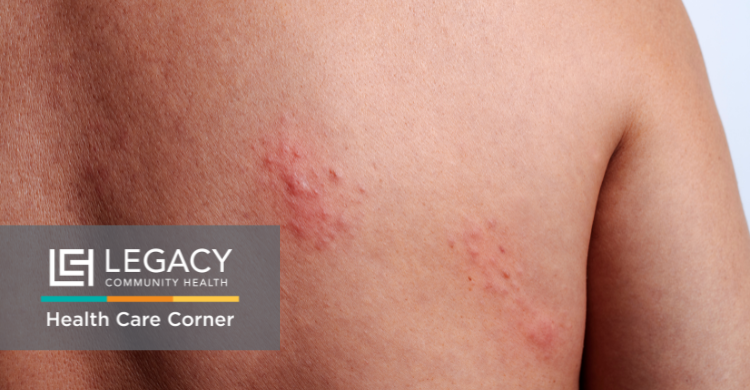
If you had chickenpox as a child, the virus that caused it never actually left your body. It stayed inactive in your nerve tissue, quietly waiting. For some people, that virus comes back later in life and causes shingles, a painful condition that affects around one million Americans every year. Ask anyone who has had shingles, and they’ll tell you how awful and itchy it is.
It’s good to know that shingles is preventable, and knowing your risk is the first step toward protecting yourself.
What Is Shingles?
Shingles is a viral infection caused by the varicella-zoster virus, the same virus that causes chickenpox. After a person recovers from chickenpox, the virus lurks in nerve tissue near the spinal cord and brain. Years or even decades later, it can wake back up and travel along nerve fibers to your skin, causing shingles.
The most common symptom is a painful, blistering rash. This rash usually appears as a single stripe of blisters that wraps around either the left or right side of the torso. But it can also show up on the face, neck, and other parts of the body. Before the rash appears, many people feel tingling, burning, or itching in the area where it will develop. Some people also have fever, headache, and fatigue.
According to the National Council on Aging, about 99% of adults over 50 already have the virus that causes shingles inside their body. Only some of these people get shingles.
Why Shingles Can Be Serious
Shingles is more than just an uncomfortable rash. For some people, it leads to complications that can seriously affect daily life.
The most common complication is postherpetic neuralgia, which causes severe nerve pain that can last long after the rash is gone. This pain can last for months or even years and is often described as burning, stabbing, or throbbing. According to the CDC, postherpetic neuralgia affects about 10% to 18% of people who get shingles.
Legacy Senior Primary Care physician Dr. Joanna Ira sees this firsthand with her patients. “Elderly patients may suffer from neuralgia for many years, even after the shingles rash has healed,” she cautions.
When shingles occurs near the eyes, it can cause additional problems like burning pain, redness, and sensitivity to light. In some cases, it can lead to vision problems or even blindness if not treated.
Real People, Real Impact
Shingles can happen to anyone who has had chickenpox, and it can strike at any age. Even professional athletes deal with it.
Houston Texans defensive tackle Sheldon Rankins recently shared his experience battling shingles during the 2024 season with CBS Sports. Rankins developed shingles along with viral meningitis in November 2024.
“A lot of people don’t know I was laying horizontal in a dark house for probably about a month and a half before I could really even sit up,” Rankins said.
Donna Kelce, mother of NFL stars Travis and Jason Kelce, shared her perspective with Essentially Sports after watching friends deal with the condition: “I’ve had a few friends who have developed shingles. It’s a very painful disease. You miss out on the most precious moments in your life because you cannot be the person you want to be because you’re in pain.”
Who Is at Risk?
While shingles can happen at any age, the risk goes up as we get older. The biggest risk factor is age. Your immune system naturally weakens over time, which makes it easier for the dormant virus to wake back up.
The National Council on Aging says the risk for shingles increases sharply at age 50. People with weakened immune systems due to health conditions or certain medications are also at higher risk.
Other things that may raise your risk include:
- High stress levels
- Physical injury or trauma
- Certain medications that affect the immune system
- Health conditions that impact immunity
Prevention Through Vaccination
The best way to protect yourself from shingles is vaccination. The vaccine currently available in the United States is called Shingrix, and it was approved by the FDA in 2017.
Shingrix works well. According to CDC research, the vaccine was 97% effective in preventing shingles in adults ages 50 to 69 with healthy immune systems. In people 70 and older, it was 91% effective.
Newer research shows that protection from Shingrix lasts a long time. Studies have found that the vaccine still provides nearly 80% protection in adults 50 and older up to 11 years after vaccination.
The CDC recommends two doses of Shingrix for healthy adults age 50 and older, with the second dose given two to six months after the first.
You should consider getting vaccinated even if you don’t remember having chickenpox as a child, you received the older shingles vaccine called Zostavax (which is no longer available in the U.S.), or you have already had shingles before.
Dr. Ira reminds patients that getting vaccinated isn’t just about protecting yourself. “You can also protect your family if you have unvaccinated kids or pregnant women in your house from serious illness,” she said.
Additional Benefits of the Shingles Vaccine
Research suggests the shingles vaccine may offer benefits beyond just preventing shingles. A 2024 UK study found that people who received Shingrix were 17% less likely to develop dementia compared to those who received the older vaccine.
Another recent study linked shingles vaccination with a lower risk of heart attack and stroke. Adults who received the two-dose vaccine had about a 16% to 18% lower risk of these events.
“This is very good news,” says Dr. Ira. “The fact that this vaccine can possibly lower the risk of dementia and stroke makes it an even easier recommendation.”
Side Effects, Coverage, and Cost
One of the most common concerns Dr. Ira hears from hesitant patients is about side effects. “Most of the patients who avoid vaccines recalled side effects with other vaccines, and that they have become sick and more prone to infections after they have received the flu vaccine,” she explains. It’s a valid concern worth addressing directly.
Like any vaccine, Shingrix can cause side effects, but they are usually mild and short-lived.
“Shingles vaccines can cause flu-like symptoms for up to two days, and it truly feels like a real flu,” said Dr. Ira. But she puts it in perspective: “One to two days of aches still beats years of future pain. This is the best we can do for our future self.”
If cost is a concern, it is good to know that Shingrix is fully covered if you have Medicare Part D or Medicaid, which means no copayment or deductible. Most private insurance plans cover the shingles vaccine as well.
Take Action for Your Health
At Legacy Community Health, we believe that prevention is just as important as treatment.
The shingles vaccine is an important part of staying healthy as you age, right alongside other vaccines like the flu shot and pneumonia vaccine.
Dr. Ira’s advice is simple: “Please talk to your doctor if you have concerns, to ensure this is a good choice for you, too.”

 HIV/STD Screening & Treatment
 OB/GYN